What Are the Differences Between Black Truffle and White Truffle?
When it comes to the most exquisite and unique ingredients in world cuisine, we can’t leave out the truffle. Whether white or black, truffles are delicious seasonings, but their prices aren’t for every budget, since they aren’t easy to come by.
However, you could say that’s the only thing these two prized fungi of the high-end culinary market have in common. Although both are called truffles, they are actually two completely different fungi. From price to aroma, from origin to appearance, they could hardly be more different from each other.
We’re talking about the black truffle, known as Tuber melanosporum, and the white truffle, called Tuber magnatum, two treasures in the kitchens of the best restaurants in the world.
How They’re Grown
The black truffle, or winter truffle, also called the Périgord truffle, is the most widely sold in Europe. It can be found both in the wild and cultivated. Spain is the leading producer of this fungus, with more than half of the world’s production.
The white truffle, on the other hand, is only found in the wild. It grows in seven regions spread between the Croatian area of Istria and the Piedmont and Tuscany regions of Italy, and it’s impossible to cultivate and farm commercially. This is one of the most important differences between the two, especially when it comes to price.
Market Prices
The white truffle (also known as Tartufo bianco d’Alba, after the town where it’s found) is considered the best truffle in the world. Its wild nature and intense flavor put its price between 2,000 and 9,000 euros per kilo, depending on each season’s harvest.
The black truffle doesn’t reach those prices, although at times of high quality it can cost up to 1,200 euros per kilo.
The white truffle’s exclusively wild nature, among other characteristics, is what makes it more expensive on the market.
Harvest Season
The white truffle is harvested from late September to late November with the help of dogs trained to find them. Because of its short shelf life (just a few days), its use is more limited.
The black truffle is harvested from December to March, either in the wild or on plantations. It has a longer shelf life than the white truffle, and its use can be extended by preserving it in glass jars or freezing it. This means it can be used grated or sliced even after it has been preserved.
Outside and Inside Appearance
One of the most noticeable differences between the two truffles is how they look, both outside and inside.
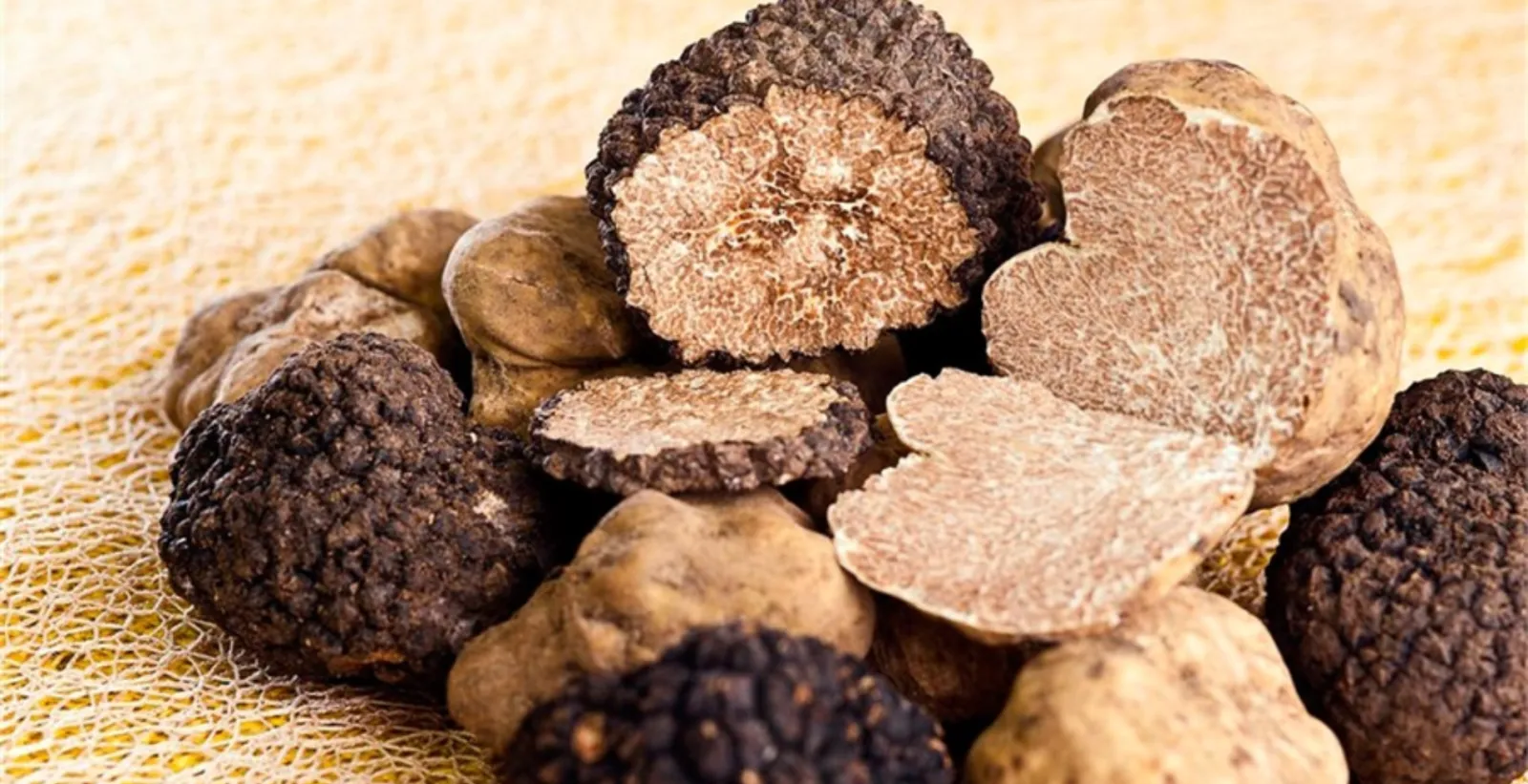
The black truffle ranges from 3 to 7 cm in size and weighs between 20 and 200 grams, although specimens of up to 500 grams are occasionally found. Its surface is rough and black with reddish tones, while the inside shows a mix of black and violet tones with white veins.
The white truffle, on the other hand, measures 2 to 8 cm, with an average weight of 40 to 300 grams, and its surface is smooth with muted ochre tones. Inside, the white truffle has white veins over reddish, brown and mahogany tones.
Aroma, Flavor and Use in the Kitchen
The differences between these two truffles aren’t limited to their appearance, harvest and price; they also affect their aroma and flavor, although both are high-quality products. Both black and white truffles are known for their intense aromas and fragrances, which add great flavor to the dishes they’re used in.
In terms of sensory characteristics, Tuber melanosporum and Tuber magnatum have distinct, strong aromas and flavors. The white truffle’s aroma is more powerful and extravagant than the black truffle’s, and it’s used more delicately in dishes because of its strong ability to add aroma and flavor.
The white truffle is eaten raw and should not be cooked, so its aroma and flavor stay intact. In this respect, the black truffle beats Italy’s “white gold” in culinary versatility, since it can be used both raw and cooked, but nothing compares to the wonder of tasting a dish subtly perfected with the flavor of white truffle.
Despite their differences, both truffles can take center stage in seasoning any dish, in flavoring oils or in creating culinary compositions that surprise beginners and experts alike in the fascinating world of gourmet cooking.
In short, black truffle and white truffle are two treasures of fine dining with notable differences in price, appearance, flavor and use in the kitchen. Both bring intensity and fragrance to the dishes they’re part of. If you want to experience the magic of white truffle in unique culinary creations, we invite you to enjoy our special dishes at the 11th White Truffle Festival by Grupo Anderson’s. From November 1 to December 31, Harry’s, Nicoletta and Ilios will be the perfect setting to enjoy the exquisite taste of these truffles in unique, delicious preparations. Don’t miss it!